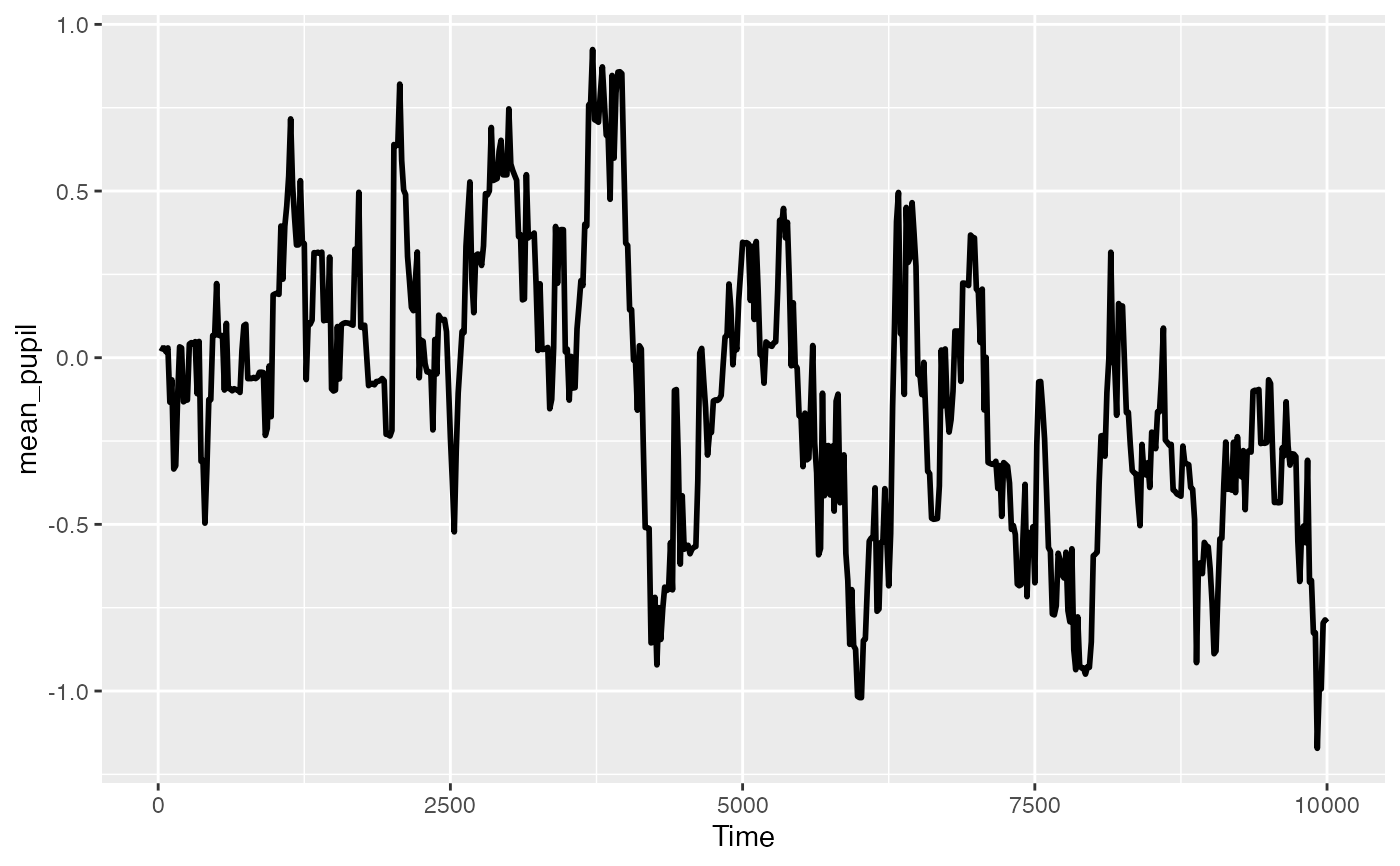
The plot functions are designed to run with just data and pupil selections, with some additional options for fun with plotting. To see these plots, you must first use create_difference_data.
Examples
Sdata <- make_pupillometryr_data(data = pupil_data,
                               subject = ID,
                               trial = Trial,
                               time = Time,
                               condition = Type)
regressed_data <- regress_data(data = Sdata, pupil1 = RPupil, pupil2 = LPupil)
mean_data <- calculate_mean_pupil_size(data = regressed_data,
pupil1 = RPupil, pupil2 = LPupil)
base_data <- baseline_data(data = mean_data, pupil = mean_pupil, start = 0, stop = 100)
#> Baselining for each subject and trial. If this is not the intended behaviour you may wish to do this manually.
differences <- create_difference_data(data = base_data,
pupil = mean_pupil)
#> Hard minus Easy  -- relevel condition if this is not the intended outcome
p <- plot(differences, pupil = mean_pupil, geom = 'line')
p